Could Your Existing Spectrum Deliver More?
Discover how QORA's spectrum efficiency capabilities could help you increase network capacity, serve more subscribers, and make better use of available frequencies.
Spectrum is the one resource every wireless operator wants more of and can rarely get. Perfectly clean channels almost never exist in the real world. After exploring why predictable performance matters in Part 2 of The Road to QORA article series, the next question is how to deliver more capacity when available spectrum is limited. The operators who succeed are the ones who make better use of the spectrum they already have. QORA is designed to help, with up to 50% more capacity than RADWIN's previous generation on the same channel under comparable conditions. Actual gains depend on configuration and radio conditions.
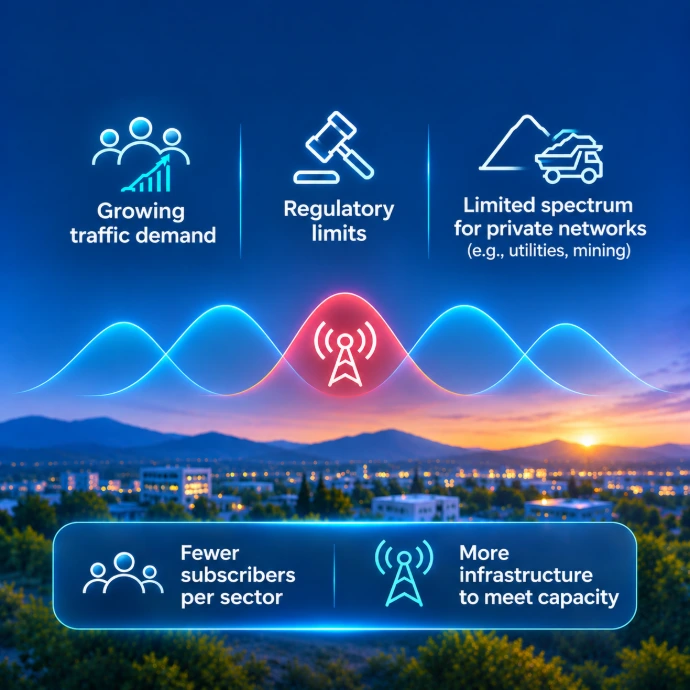
Why is spectrum such a bottleneck?
Unlicensed bands are shared, busy, and getting busier. Regulation limits how much spectrum operators can use in some bands. Private networks, such as a utility or a mine, may have only a narrow portion of a band available.
Interference can force conventional equipment to reduce channel width, sacrificing throughput just when traffic demand is growing. For operators, that can mean fewer subscribers served per sector or more infrastructure to meet capacity targets.
What Is Wi-Fi 7 Preamble Puncturing, and Why Does It Matter?
Puncturing is one of Wi-Fi 7's most useful features. Think of a wide road with a pothole in one lane. Instead of closing the entire road, puncturing allows traffic to bypass the affected section and use the remaining lanes. In radio terms, equipment can avoid an interfered portion of a channel while continuing to use the unaffected spectrum.
QORA uses puncturing in two ways:
If interference affects part of a wide channel, QORA can simply skip the affected portion and continue using the remaining clear spectrum. This helps maintain higher capacity instead of reducing the bandwidth of the entire channel.
Fitting awkward spectrum. When the spectrum you're allowed to use doesn't match standard channel sizes, QORA can build custom widths such as 60, 120, or 200 MHz. That lets you fit more working channels into the same block. QORA supports 39 different puncturing patterns, implemented in hardware to minimize processing overhead. Actual usable capacity still depends on the active channel segments and radio conditions.

How Does QORA Improve Wireless Spectrum Efficiency?
4.9 to 7.125 GHz
Wide channels when conditions allow. QORA works from 20 MHz up to 320 MHz, across 4.9 to 7.125 GHz, subject to local regulations.
Automatic adjustment
When conditions get tough, QORA can adjust channel width or transmission parameters to prioritize link stability and increase capacity again when conditions improve.
Less wasted airtime
RADWIN's efficient retransmission design resends only what's needed, so more airtime carries customer traffic.
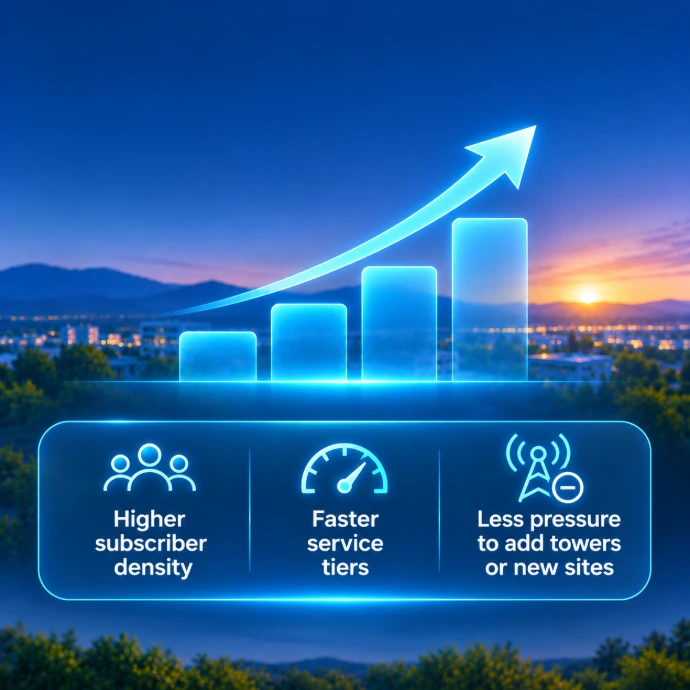
What does better spectrum efficiency mean for my business?
More capacity from available spectrum can translate into higher subscriber density, faster service tiers, and less pressure to add towers or acquire new sites. It can also help operators make better use of crowded bands and improve the economics of network expansion.
The practical benefit depends on the spectrum available, interference levels, and network design.
Frequently asked questions
Wi-Fi 7 puncturing allows wireless equipment to skip portions of a channel affected by interference while continuing to use the remaining clear spectrum. Instead of reducing the bandwidth of the entire channel, operators can make better use of the available frequencies.
Can puncturing improve capacity in congested spectrum?
Yes. By avoiding interfered portions of a channel, puncturing can help maintain higher usable bandwidth and throughput. QORA also uses puncturing to support flexible channel widths, helping operators make more efficient use of limited spectrum. Actual performance depends on interference levels, available spectrum, and network conditions.
No. QORA supports channel widths from 20 MHz upwards. Puncturing and custom channel widths can provide value when clean contiguous spectrum is limited; the benefit depends on the deployment.
Yes, QORA's platform covers 4.9 to 7.125 GHz. Availability of specific frequencies and features such as DFS or AFC is market-dependent and subject to local regulatory approval.
Not necessarily. Improved spectral efficiency and frequency reuse may help existing sites carry more traffic, but tower requirements depend on coverage, capacity, and network engineering.
Upcoming article
Read how one wireless network can support residential broadband, business connectivity, and critical services with different performance needs. Article 4 will explore the business opportunity behind service differentiation.

Subscribe to our next article
Follow the series and get QORA updates first.