In Part 1 of The Road to QORA, we explored how Wi-Fi 7 opens new possibilities for fixed wireless access. But speed alone does not win long-term customer loyalty. For broadband operators, the real test is peak-hour performance: can the network deliver a consistent experience when every customer is online?
Standard Wi-Fi 7 increases potential capacity, but outdoor networks also need control over how airtime is shared. That's where deterministic wireless comes in.
Missed Part 1?
Read Wi-Fi 7 Goes Outdoors: What It Means for Fixed Wireless
What's the problem with ordinary Wi-Fi outdoors?
Imagine a four-way intersection without traffic lights. Traffic flows when roads are clear, but congestion causes hesitation and delays. Ordinary Wi-Fi works similarly: each device waits for a quiet moment to transmit, hoping no other device transmits at the same time.
Indoors, contention is often manageable. Outdoors, dozens of subscriber sites may share a sector while nearby sectors operate in overlapping spectrum. Congestion and interference can mean slower service at peak hours, uneven customer experience, and more support calls. For an operator selling business-grade connectivity, unpredictability can also limit the services it can confidently offer.

Ordinary Wi-Fi: Uncoordinated access. Contention, delays and unpredictable throughput.

Deterministic Wireless: Coordinated access. Scheduled transmissions and predictable performance.
What Is Deterministic Wireless Networking?
Deterministic means predictable. Rather than relying solely on devices competing for airtime, a purpose-built outdoor system coordinates when subscriber units send and receive. Scheduled transmissions reduce contention and help the operator manage how network resources are allocated.
The result is a more consistent, manageable service with performance targets that can be planned, monitored and supported under defined network conditions.
How does QORA bring predictable performance to Wi-Fi 7?
QORA keeps Wi-Fi 7's capacity and adds RADWIN technology built for carrier-grade outdoor networks:
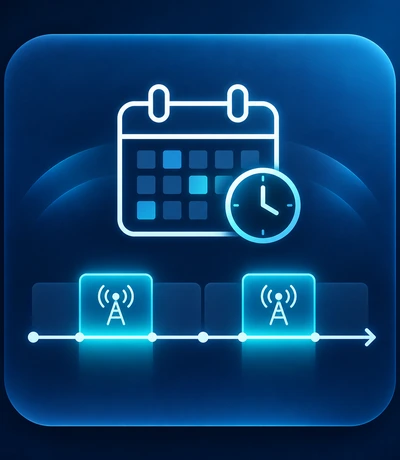
Scheduled Airtime for Every Site
Each subscriber unit gets dedicated time slots, so customers don't interfere with each other.
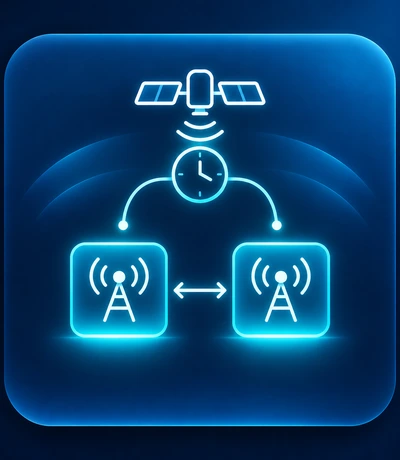
Neighboring Sector Synchronization
GPS-based timing coordinates transmission and reception across compatible sectors, helping limit self-interference when frequencies are reused.
Focused Beam
QORA's fifth-generation beamforming concentrates radio energy toward the intended subscriber, reducing reception of interference from other directions.
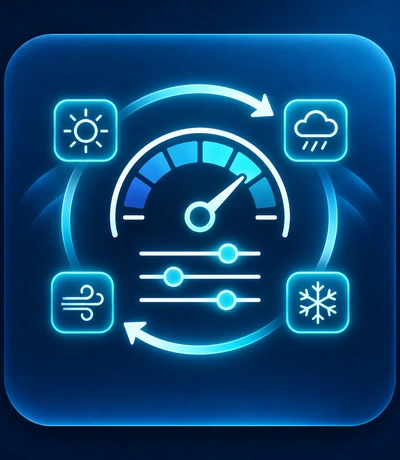
Continuous Adaptation
QORA adjusts transmission parameters as radio conditions change, helping maintain link performance in challenging environments.
Why Does Predictable Wireless Performance Matter for Operators?
For an ISP or WISP, predictable service
quality creates a stronger business case: fewer peak-hour surprises, clearer
service tiers, and greater confidence when approaching business and
public-sector customers. It can also reduce the operational burden of troubleshooting
inconsistent connections. For services such as video surveillance or industrial
communications, the ability to manage uplink capacity and service priorities
becomes especially valuable.
QORA is designed to combine Wi-Fi 7 capacity with the scheduling, synchronization, and beamforming needed for reliable outdoor broadband, moving the conversation from headline speeds to the experience an operator can consistently deliver.
Frequently asked questions
QORA is built on Wi-Fi 7 technology but isn’t off-the-shelf Wi-Fi 7 gear. RADWIN adds its own scheduling, synchronization and beamforming to make it suitable for carrier-grade outdoor networks.
No. Scheduling gives each subscriber unit dedicated airtime instead of making devices compete for it. That cuts the collisions and retransmissions that waste capacity, so performance holds up better at peak hours, when contention-based networks slow down most.
Yes. Operators can set the balance between download and upload time, from download-heavy to upload-heavy, to suit the application. That makes QORA a good fit for video surveillance, industrial monitoring and other services that send more data than they receive.
Standard Wi-Fi uses contention: each device waits for a quiet moment and hopes no one else transmits at the same time. Deterministic wireless coordinates when each subscriber unit sends and receives, so access is scheduled instead of competed for. The result is more predictable throughput, especially when the network is busy.
QORA uses GPS-based timing to coordinate transmission and reception across neighboring sectors, which limits self-interference when frequencies are reused.
QORA continuously adjusts transmission parameters as conditions change, whether from interference, obstructions or weather. Its beamforming also focuses energy on each intended subscriber, which reduces interference from other directions. Together, these help keep links stable in difficult environments.
Yes. Because airtime is scheduled and performance is more predictable, operators can plan, monitor and support service targets under defined network conditions. That gives them more confidence when offering business-grade tiers and serving public-sector customers.

Don't miss our next article
Follow the series and get QORA updates first.